India ·
Taj Mahal at Sunrise, Agra Fort, and the Family Workshop Behind the Marble
First through the East Gate, then the fort that watches the Taj across the river, then the workshop where the inlay is still cut by hand.
Duration
A full day, starting before sunrise
Difficulty
Easy
Group Size
Private
Best Season
October to March - to avoid the beating heat
Firwat Mir Dëst Gewielt Hunn
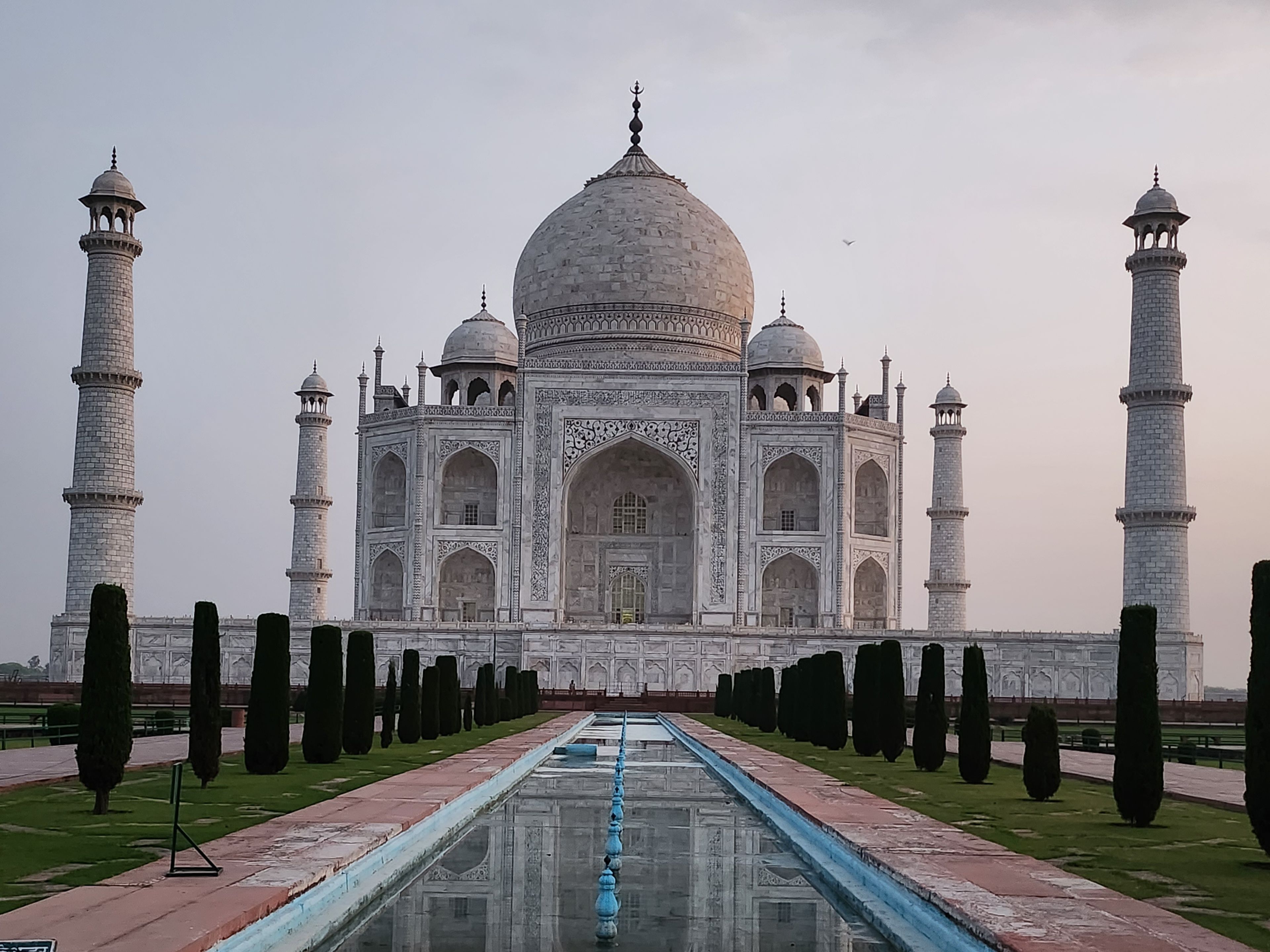
Some would call it a very late night. Others would call it a very early morning. Either way, you start the day in a tuktuk with a guide who used to work for the Indian government, has a history degree, and has been waiting outside the hotel since before the sky started changing colour. He drives you to the East Gate. There are three gates into the Taj Mahal complex; only one of them puts you inside before the light is good, and only one of them empties straight into the line of sight that the architects designed for. You will not be the only person there at five in the morning, but you can be the first one through if you run, and the guide will tell you when to start running. The Taj is one of those places that people warn you about. They say it's smaller than you think. They say the crowds ruin it. They say the photographs have prepared you for the reality. They are wrong on all three counts. The marble shifts colour as the sun comes up - pink, then white, then a faint gold by the time you walk away from it. The guide tells you about Shah Jahan and Mumtaz, about the seventeen years it took to build, about the river that was meant to have a black marble twin on the opposite bank but never got one. By eight you are back at the hotel for breakfast and a nap. The day starts again at eleven. Agra Fort is a fifteen-minute drive from the hotel. Most people miss it. From the marble pavilions on the western edge, you can see the Taj across the bend in the Yamuna river, exactly as Shah Jahan saw it from the rooms where his son kept him imprisoned for the last eight years of his life. The fort tells the rest of the story the Taj only hints at. After the fort, the guide takes you to a family workshop tucked into the old city. The family claims their ancestors worked on the original Taj Mahal inlay four hundred years ago, and you are welcome to take that with whatever pinch of salt you want. What is undeniable is the work in front of you: agate, jasper, lapis, and mother-of-pearl being cut by hand into petals smaller than your fingernail, set into white marble with a precision that would not have looked out of place in 1648. They sell the pieces. You will probably buy one. Back at the hotel by late afternoon. Dinner is up to you.
Héichpunkten
Private guide with a history degree and a working relationship with the gate staff
Agra Fort, with the marble pavilions that look across to the Taj from the rooms where Shah Jahan was imprisoned
A family workshop in the old city where the marble inlay is still cut by hand, by descendants of the original craftsmen
Door-to-door from your Agra hotel by tuktuk
Built around a sleep-and-breakfast break in the middle of the day
First through the East Gate at sunrise, before the light gets ordinary
Dag fir Dag
A Day at the Taj
The day starts in the dark. A tuktuk pulls up outside the hotel before five, the guide already half a cup of chai in. By the time the West Gate opens you are at the front of the queue. By the time the sun catches the dome you are already inside, watching the marble move through three colours in twenty minutes. You are back at the hotel by eight for breakfast and a few hours of sleep. The day picks up again at eleven. Agra Fort is fifteen minutes away, and most people skip it on a Taj-only trip, which is the mistake. The fort tells the rest of the story: the imprisonment of Shah Jahan, the marble pavilions where he watched the Taj from across the river, the eight years he spent looking at the building he had built for his wife and could no longer reach. Mid-afternoon is the workshop, tucked into the old city. An hour with the inlay craftsmen, the colour palette laid out on a slab of white marble, agate and lapis being cut by hand. You leave with something small wrapped in tissue paper. Back at the hotel before the heat goes.
Wat Abegraff Ass
✓ Private guide for the full day
✓ Round-trip tuktuk transport between your hotel, the Taj, the fort, and the atelier
✓ Sunrise entry to the Taj Mahal complex (gate timing strategy)
✓ Agra Fort guided visit
✓ Family inlay workshop visit
Net Abegraff
✗ Taj Mahal entry ticket (1,300 INR / approximately €14 for foreigners, paid at the gate)
✗ Agra Fort entry ticket (650 INR / approximately €7 for foreigners, paid at the gate)
✗ Hotel accommodation
✗ Meals
✗ Anything you choose to buy at the workshop
Praktesch Informatiounen
Stay in Agra the night before and the night of. The Taj Hotel and the Oberoi Amarvilas are the two with views of the Taj from the rooms.
Wear comfortable walking shoes. The Taj complex is large, the fort is larger.
Cover your shoulders and knees. The Taj is a mausoleum.
Cameras are allowed inside the Taj garden but not inside the mausoleum itself. Tripods need a separate permit. Drones are banned.
The guide will brief you on the gate strategy in the tuktuk on the way over. Listen.
Treffpunkt:
Your Operator
Local Partner
Photos
Mir informéieren Iech soubald dës Erfarung erëm disponibel ass. Dir sidd prioritär.