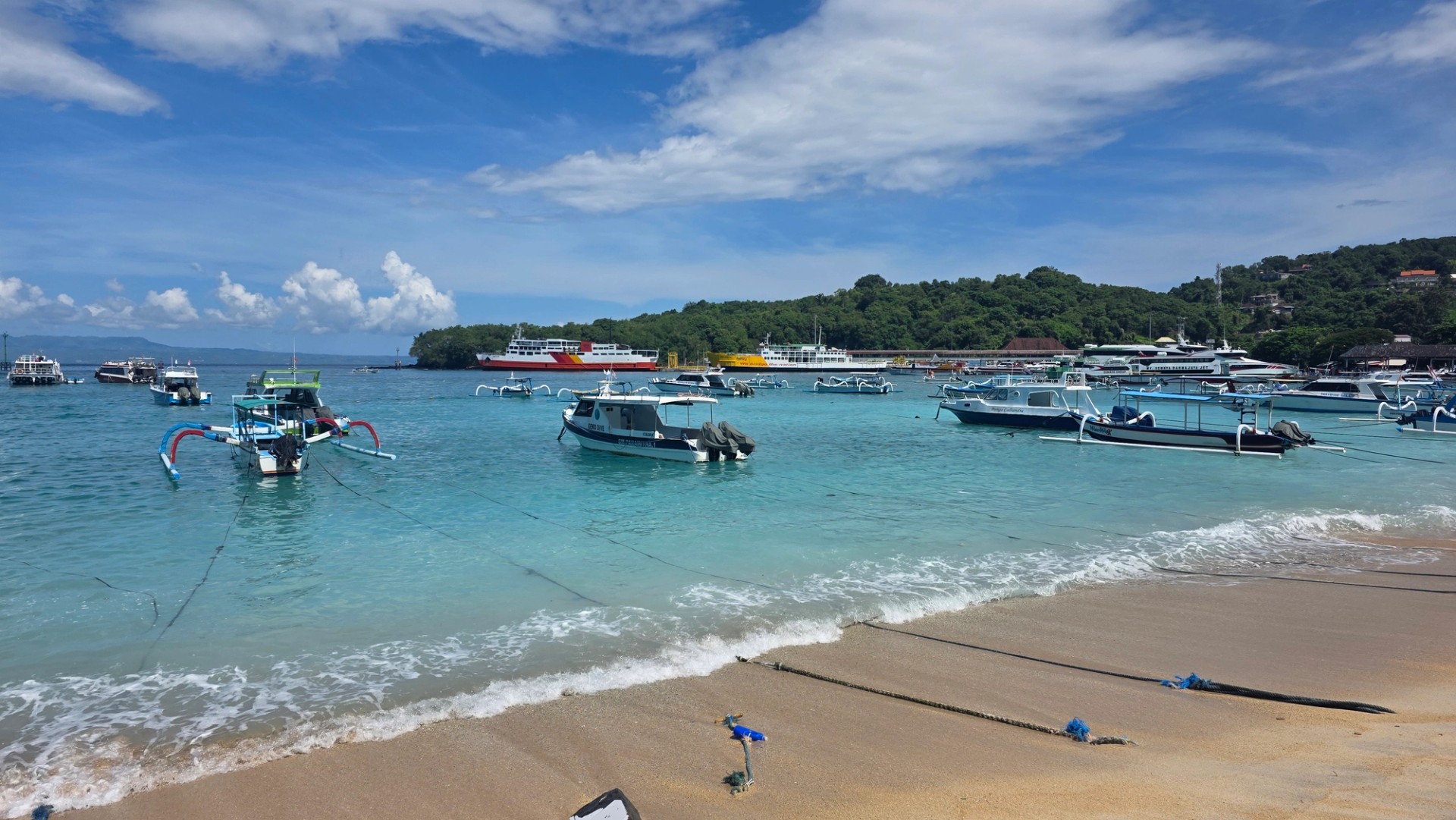
How Getting PADI Certified Changed the Way I Travel
PADI Open Water certification in the UK costs around £625 in two parts. Part A is a full day at a training pool, £350, where you learn the equipment, run through emergency drills, and do progressively deeper dives across the session. Part B is two half-days, in our case at Vobster Quay in Somerset, £275, where the actual open-water dives happen, including the 18-metre qualifying dive.
The obvious question is why you would do this in Britain rather than in the tropical waters of SEA, where the same certification costs about a third of the price. Two reasons.
First, language. Diving is a discipline where the safety briefings matter, and doing them in English with an instructor who trained in English removes an entire category of possible confusion. Some of the emergency skills (out-of-air drills, buddy breathing, controlled ascents) are the kind of thing you want to have absolutely understood the first time.
Second, holiday time. Certifying in Asia means spending three or four days of your trip in a classroom, watching PADI videos, and doing initial dives in shallow water while other people are on real ones. The UK version front-loads all of that into two weekends before you leave, so the holiday time in the water is spent on the dives you actually flew there for.
The trade-off is real. UK waters run at around 10 degrees, in a full 7mm wetsuit or a drysuit, with visibility measured in metres. Warm-water certification is genuinely more comfortable. But comfort in training isn't the same thing as competence, and cold water forces you to focus on the skills without being distracted by tropical fish.
Once certified for Open Water, the natural next step is Advanced Open Water. We did ours in East Bali, over two days, for around £250. The classroom side is much shorter than the initial Open Water e-learning, and the PADI app lets you download the material so you can work through it offline (we did most of it on the flight out).
The dive that made the trip worth it was the USAT Liberty, a Second World War American cargo ship torpedoed in 1942 and now sitting in the sand off Tulamben. It rolls out from about 5 metres down to 30, with the deepest sections around 28 to 30 metres. Open Water certification tops out at 18. Advanced unlocks 30. Doing the Advanced certification in Bali meant every training dive was also a dive we wanted to do anyway, including one at 22 metres inside the Liberty wreck itself. We also dived the Tulamben coral gardens.
We had wanted to see the Mola mola at Nusa Penida, but the dive school told us honestly that September was the right season, not April. That kind of honesty is worth paying for. We still went to Manta Point, and this is where the article's central claim earned itself.
We had swum with manta rays before, snorkelling at Komodo. That was frantic. The mantas moved fast, we swam hard trying to keep up, everyone was looking through the same three metres of water column at the same fish and the surface chop was constant. Nothing wrong with it, but it was tourism-shaped.
Manta Point at Nusa Penida, dived rather than snorkelled, was completely different. You descend to the cleaning station at about 12 metres, you find neutral buoyancy, you stop moving. The mantas come to you. You watch them for as long as they stay. There is no swimming after them. There is no surface chop. There is time. That's the difference between snorkelling and diving stated in one dive: not more of the same thing, but a different thing entirely.
This is the split we would recommend to anyone else. Foundation in the UK, progression in Asia. It costs more than certifying entirely in Thailand, but it earns back the difference in confidence, water quality, and holiday time.
Get certified. Get Advanced immediately after.
Questions fréquentes
Yes. The unlock (30 metres, night dives, deep dives) is worth the extra £200.
La lettre Cavale
Des histoires qui valent le voyage
Un seul e-mail soigné. Des notes de terrain, de nouveaux itinéraires, et parfois une table qui vaut le détour.
Adhésion
Voyagez avec Cavale
Tarifs membres, accès anticipé aux nouvelles expériences, et un planificateur qui transforme des histoires comme celle-ci en itinéraire.
Découvrir l'adhésion →